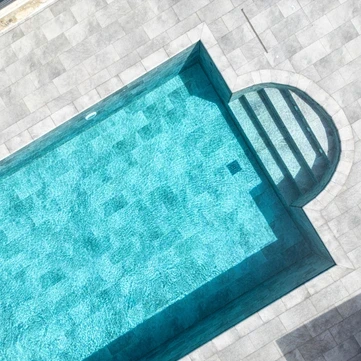
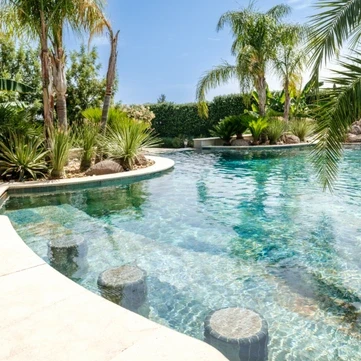
Pool hygiene is often evaluated solely based on the clarity of the water. However, this approach overlooks one of the main factors that determine pool hygiene: the surface covering material that is in constant contact with water.
Pool tiles are not merely an aesthetic choice. They play a directly decisive role in hygiene, safety, maintenance costs, and long-term performance. Incorrectly selected pool tiles can create microbial risks, surface deformations, and persistent hygiene problems even in pools equipped with the most advanced filtration systems. Here is what you need to know about choosing the right tile for pool hygiene:
What Is Pool Hygiene?
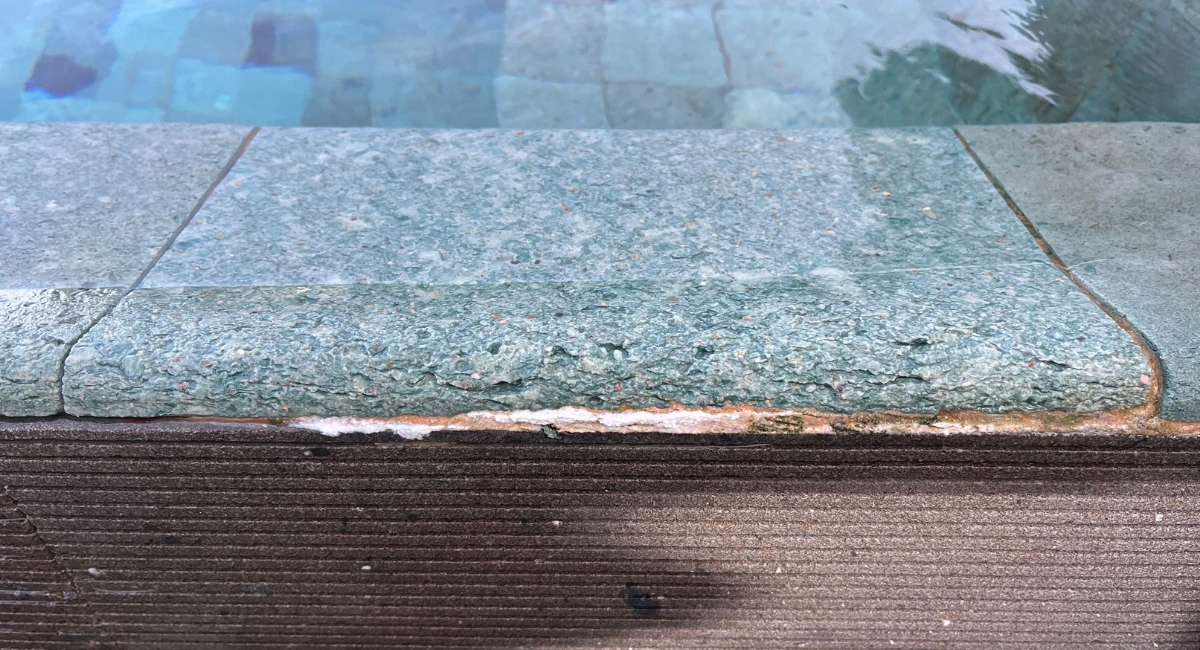
Pool hygiene is often limited to chemical balance, filtration capacity, and regular cleaning practices. However, hygiene is not a process that takes place only in the water. Every surface that comes into contact with water is an active part of the hygiene chain. For this reason, the pool floor, walls, overflow channels, steps, and edge details are just as important as the water itself.
If the surface material has a porous structure, it creates adhesion areas for microorganisms. Over time, these areas lead to the formation of biofilm. Biofilm is a layer formed when bacteria adhere to surfaces and develop resistance to chemicals. Once biofilm forms, standard disinfection methods become insufficient and hygiene continuity is compromised.
In addition, surface roughness and grout structure are critical parameters for hygiene. Irregular surfaces and wide grout joints accelerate the accumulation of dirt and organic waste. This results not only in aesthetic deterioration but also in slipperiness, staining, and the formation of permanent bacterial colonies on the surface.
For pool hygiene to be sustainable, the covering material must have a low water absorption rate, be resistant to chemicals, and maintain surface integrity for many years. At this point, tile selection becomes the cornerstone of the hygiene chain.
Hidden Hygiene Risks Caused by Incorrect Tile Selection
Incorrect tile selection carries risks that may not be noticed in the short term but lead to serious hygiene problems in the long run. The most dangerous aspect of these risks is that they often progress without creating a visibly obvious problem. Pool operators may encounter user complaints even when water analysis results appear clean.
Covering materials with porous surface structures absorb water and chemical residues into their body. This causes the surface to remain constantly damp. Damp surfaces provide an ideal environment for the growth of bacteria and fungi. This risk increases exponentially, especially in warm climates or heavily used pools.
Another significant risk is the formation of micro-cracks on the surface over time. Low-quality tiles or tiles not suitable for pool use cannot withstand thermal changes and chemical exposure. These micro-cracks create hygiene pockets that are impossible to clean. Such pockets become areas that standard cleaning equipment cannot reach.
Incorrect tile selection also increases maintenance costs. Continuous increases in chemical dosage, more frequent cleaning requirements, and surface renovation needs arise. This significantly raises operational costs, especially in hotels, residential complexes, and public pools.
From a hygiene perspective, incorrect tile selection is not merely a material mistake, but a chain risk factor affecting operations, health, and brand perception.
The Relationship Between Low Water Absorption, Non-Porous Structure, and Hygiene
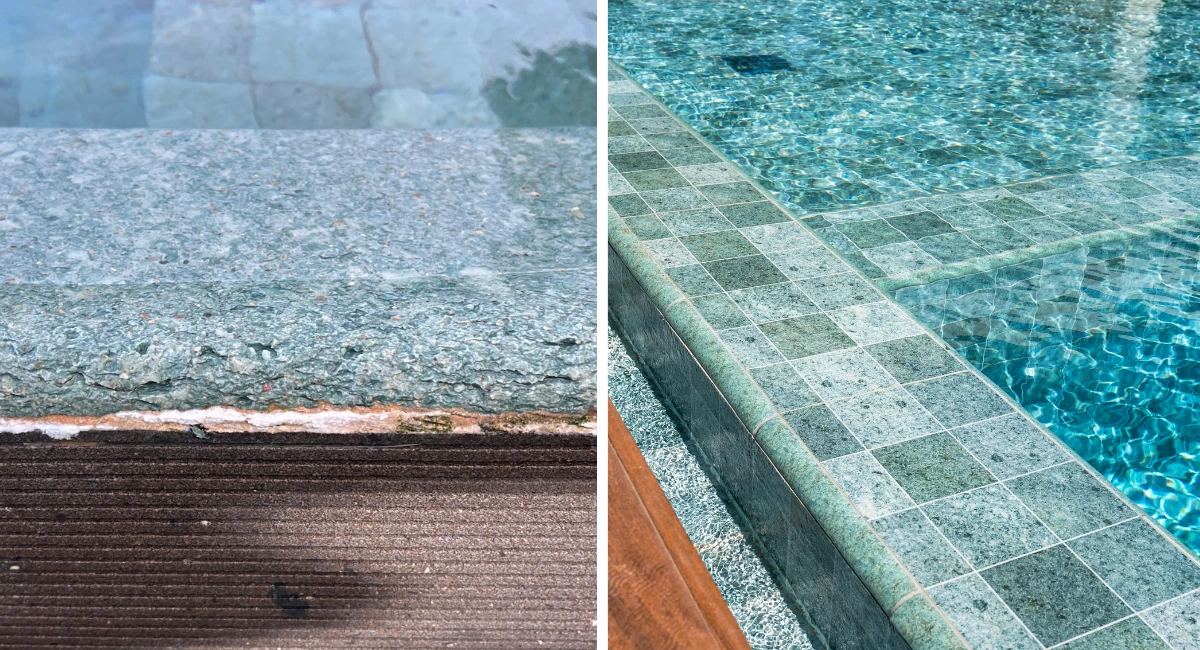
The first and most critical criterion in choosing the right tile for pool hygiene is the water absorption rate. Technically, the water absorption rate refers to the material’s capacity to absorb water. The lower this rate, the more hygienic the surface is considered.
Tiles with a non-porous structure retain water on the surface but do not absorb it into the body. This property largely prevents the formation of microorganisms. Bacteria and fungi require moist and porous surfaces to adhere and grow. On non-porous surfaces, this adhesion cannot occur.
In addition, a low water absorption rate is directly related to chemical resistance. Since chlorine and similar disinfectants used in pool water are not absorbed by the surface, they do not damage the tile structure. This allows the surface to maintain its original hygiene performance for many years.
Another advantage of non-porous tiles is ease of cleaning. Dirt, oil, and organic waste cannot adhere to the surface, so standard cleaning practices are sufficient. This both shortens cleaning time and reduces the need for aggressive chemicals.
The Direct Connection Between Slip Resistance, Surface Integrity, and Hygiene
Slip resistance is often evaluated solely under the heading of safety. However, from a hygiene perspective, there is a direct relationship between slip resistance and surface integrity. Incorrect slip-resistance technologies can increase hygiene risks by making the surface excessively rough.
Overly rough surfaces created by traditional methods form microscopic grooves and protrusions. These areas provide suitable grounds for dirt and bacteria accumulation. The more irregular the surface, the more difficult it becomes to clean. For this reason, hygienic pool tiles must offer controlled and technically optimized slip resistance.
Surface integrity refers to the tile’s ability to resist wear and structural degradation over time. Worn surfaces not only cause aesthetic loss but also pose hygiene risks, as wear leads to the exposure of pores and the loss of original production characteristics.
The right tile selection must provide a balance between slip resistance and hygiene. When this balance is achieved, both user safety and long-term hygiene performance are preserved. This criterion is of vital importance, especially in hotel pools, residential pools, spa areas, and high-traffic facilities.
Chemical Resistance and Long-Term Hygiene Continuity
The chemicals used in pool water are indispensable for hygiene. However, these chemicals must be compatible with the surface material. Pool tiles with low chemical resistance experience surface degradation over time and lose their hygiene performance.
Color changes, surface roughening, and micro-cracks caused by chemical interaction weaken the hygiene chain. This situation makes increased chemical usage inevitable.
“The vicious cycle works as follows: the surface deteriorates, hygiene declines, chemicals increase, and the surface deteriorates even further.”
Tiles with high chemical resistance prevent this cycle from the outset. Since the surface structure remains stable, hygiene continuity is maintained. This means lower maintenance costs and a more stable hygiene standard throughout the pool’s life cycle.
In the long term, chemical resistance is not merely a technical feature, but a strategic criterion that directly affects operational efficiency and user health.
Ease of Maintenance, Cleaning Processes, and Operational Hygiene
Sustainability in pool hygiene is related not only to choosing the right material but also to the maintenance and cleaning processes of that material. The right pool and terrace tile simplifies maintenance processes, while the wrong tile turns cleaning into a constant struggle. Ease of maintenance is achieved by stain resistance, minimal grout joints, and preserved surface integrity. These features reduce cleaning frequency and allow hygiene to be maintained through standard procedures. From an operational perspective, easy-to-clean surfaces reduce labor costs. Less chemical use, lower water consumption, and shorter cleaning times provide significant advantages, especially for large-scale pool operations. The operational sustainability of hygiene is directly reflected in user satisfaction. Pools that are easy to clean create a more consistent perception of hygiene and support brand reliability.The Impact of Proper Tile Selection on User Health
Hygiene is not only a technical reality but also a perceptual factor. When users enter a pool, they subconsciously evaluate surface texture, the sense of cleanliness, and visual integrity. Proper tile selection positively shapes this perception.
Smooth, intact, and visibly clean surfaces inspire confidence. This confidence strengthens the perception that the pool is hygienic. Especially in hotel and residential pools, this perception is one of the key determinants of user satisfaction.
From a health perspective, proper tile selection minimizes risks that may arise from skin contact. Non-porous and chemically resistant surfaces reduce the risk of skin irritation and infection. This is particularly critical for children and users with sensitive skin.
For Hygienic Pools, Tile Selection Is Not a Detail but a Fundamental Decision
Choosing the right tile for pool hygiene is often a decision that remains in the background of the design process, yet it is one of the most decisive factors in terms of outcomes. The five key aspects discussed in this article—water absorption rate, surface structure, slip resistance balance, chemical resistance, and ease of maintenance—shape not only today’s hygiene but also its future.
Incorrect tile selection leads to serious health, cost, and brand perception problems that may go unnoticed in the short term but become significant over time. Proper tile selection ensures sustainable hygiene, reduces operating costs, and strengthens user trust. For this reason, selecting hygienic pool tiles should be considered not as an aesthetic preference but as a strategic decision with technical, health, and operational dimensions.
Whether a pool is hygienic should not be measured solely by water analysis reports, but by the performance of every surface that comes into contact with water. When this reality is taken into account, correct tile selection is not a complementary element of hygiene but its direct determinant.
For more detailed information on pool tile selection, you can read our article titled “ Glass Mosaic, Ceramic, or Porcelain? Choosing the Right Surface for Your Pool ”.