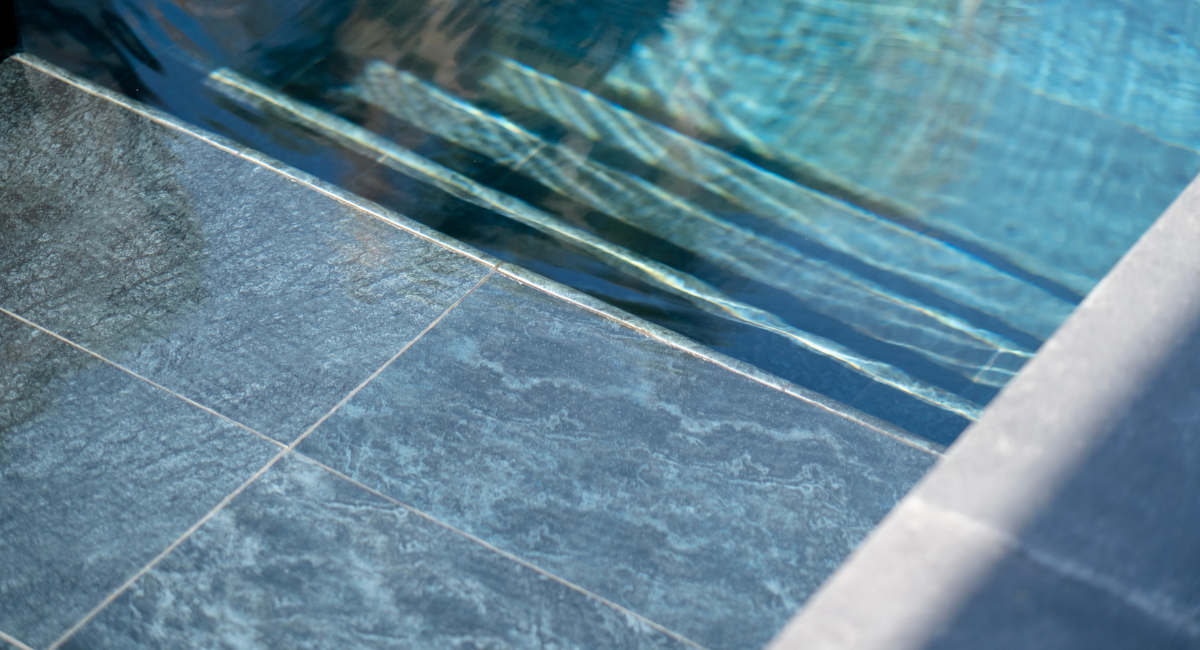
Thanks to its structural characteristics, porcelain stands apart from many surface materials. This distinction is not limited to the visible surface, but emerges as a unified performance that extends throughout the entire material. When the properties of porcelain are examined, it becomes clearer why it is regarded as a long-term and reliable choice.
Low Water Absorption Rate
One of the most distinctive properties of porcelain is its extremely low water absorption rate. This is achieved through the densification of the structure during high-temperature firing of the raw materials. As porosity decreases, it becomes more difficult for water and moisture to penetrate the material. A low water absorption rate makes porcelain resistant not only to moisture but also to freezing, thawing, and chemical effects. At the same time, the risk of surface staining is reduced, providing a hygienic usage environment.
Dense and Homogeneous Structure
Porcelain achieves a homogeneous structure throughout its production process. This homogeneity ensures that the material exhibits the same physical properties not only on the surface but across its entire cross-section. Surface wear does not significantly affect the overall performance of the material. The dense structure increases mechanical strength. Resistance to impacts, pressure, and intensive use contributes to porcelain maintaining its form over long periods.
High Mechanical Strength
The hard structure of porcelain creates strong resistance against physical effects such as scratching and abrasion. This property slows down surface wear over time. Friction and contact caused by daily use do not quickly reduce the material’s performance. Mechanical strength ensures that porcelain is a reliable surface not only aesthetically but also functionally. This feature becomes particularly decisive in areas requiring intensive use.
Resistance to Heat and Temperature Changes
Porcelain exhibits stable behavior against sudden temperature changes. High firing temperatures increase the material’s thermal resistance. As a result, surface deformations caused by expansion and contraction remain limited. Heat resistance allows porcelain to be used in different climatic conditions and variable environmental settings. The material maintains its structural integrity when exposed to temperature differences.Chemical Resistance
The dense structure of porcelain makes it difficult for chemical substances to penetrate the surface. Cleaning agents, external factors, or environmental chemicals do not cause permanent damage to the material. This ensures that both the appearance and technical properties of the surface are preserved over a long period. Chemical resistance makes the maintenance process more controlled. Even incorrect or intensive cleaning applications reduce the risk of leaving permanent effects on the surface.
Color and Texture Continuity
In porcelain, color and texture are not superficial applications but natural outcomes of the production process. Pigments and textures are evenly distributed throughout the material’s structure. This distribution limits color changes or tonal variations over time. Color and texture continuity enable porcelain to retain its aesthetic value for extended periods. The surface continues to display a character close to its original appearance.
Low Maintenance Requirement
Porcelain’s technical properties naturally reduce maintenance needs. Thanks to its non-porous structure, the surface does not retain dirt, and cleaning can be achieved with minimal intervention. There is no need for special maintenance products or complex applications. Low maintenance requirements contribute to the material maintaining its performance throughout its service life. This makes porcelain not only durable but also a sustainable surface material.Long-Term Performance
When the properties of porcelain are evaluated individually, it becomes evident that the material does not offer a short-term solution. When dense structure, low water absorption, mechanical strength, and chemical resistance come together, a predictable performance over time emerges. Porcelain stands out as one of the fundamental building blocks of conscious material selection, with properties that support long-term use.





.webp)